Embracing Complexity in the Renewables Space
Our research program addresses scientific challenges in the transition from a linear, fossil-dependent industry to a circular one based on renewable resources. We develop methods to integrate widely available sustainable carbonaceous material streams (such as renewable biomass and plastic waste) into the circular bioeconomy.
While deeply rooted in sustainable catalysis and green chemistry, the research group uses a highly interdisciplinary approach. Group members have expertise and skills in a wide range of areas including:
- Emerging biorefinery concepts
- Circular bioproducts
- Lignin chemistry
- Polymers and composites
- Homogeneous and heterogeneous catalysis
- Chemical engineering
- Organic chemistry
Building upon our established expertise in biorefining and catalysis, our research also extends to the downstream processing of renewable platform chemicals and sustainable value chains leading to usable products.
The primary goal is to develop novel and efficient synthetic methodologies that provide access to a diverse array of value-added product classes.
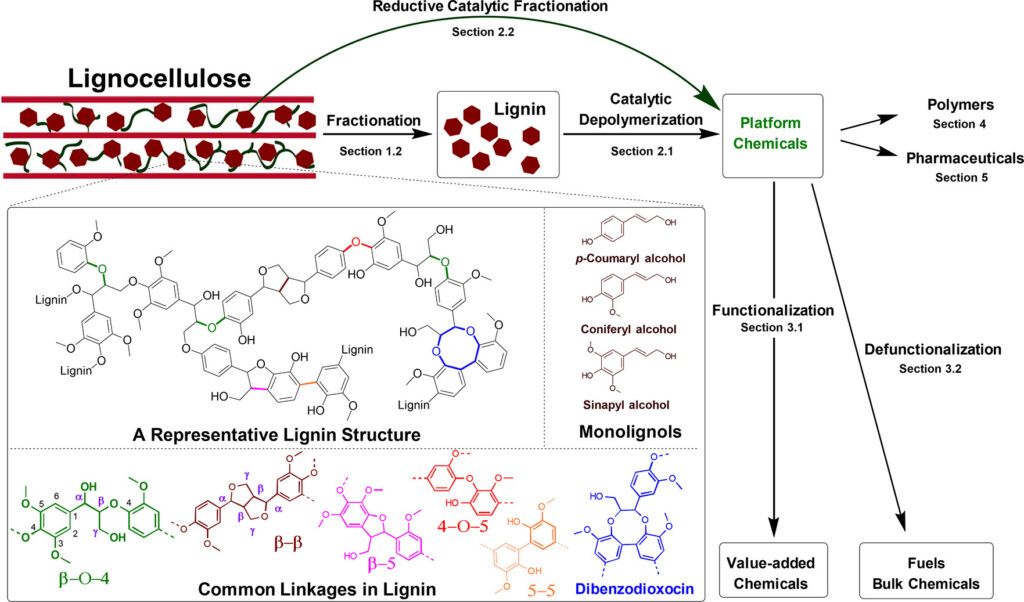
In particular, the team employs lignin-first approaches to unlock the unique potential of lignin for the production of well-defined aromatic chemicals.

Biobased Polymers and Materials
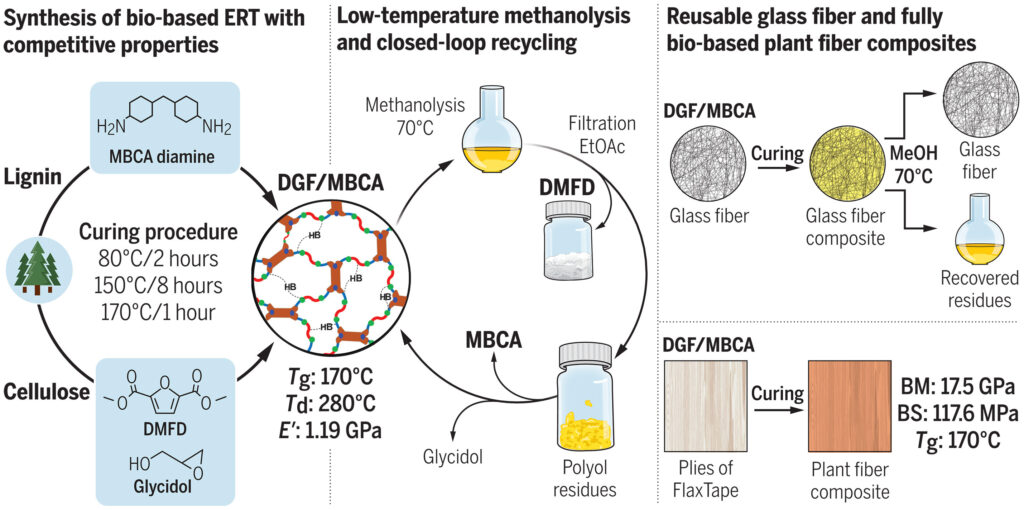
We work towards the design and synthesis of bio-based polymeric materials from renewables as alternatives to traditional petroleum-based thermoplastics and thermosets. Key performance criteria include low toxicity, good thermal/mechanical properties, and high potential for inherent recyclability.
The focus of our currently running ERC Consolidator grant StimulART is sustainable thermoset materials. Thermosets, while durable and thermally stable, are typically non-recyclable and petroleum-derived. We address this by:
- Developing bio-based thermosets (e.g., from lignocellulosic biomass).
- Establishing novel, low-temperature recycling and end-of-life strategies to contribute to a circular economy.
Key Papers:
Green Pharma Development
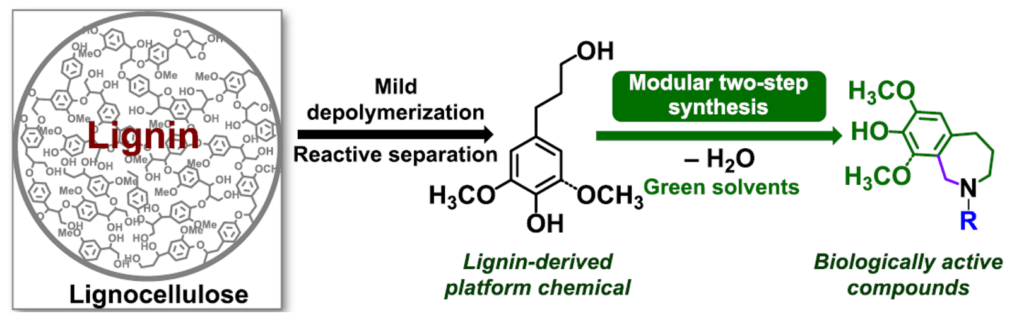
Lignin- and biomass-derived platform chemicals possess inherent structural complexity that serves as an excellent starting point for the development of atom-economic pathways to more complex, high-value products, specifically biologically active molecules and active pharmaceutical ingredients (APIs).
Incorporating such high-value products significantly enhances the economic feasibility of lignocellulosic biorefineries.
We integrate the principles of Green Chemistry into our developed methods to provide sustainable routes for pharmaceutical production. Key objectives include reducing E-factors, minimizing hazardous waste, and avoiding extensive solvent use.
Sustainable Surfactants
We design and synthesize high-performance bio-based surfactants utilizing diverse bio-renewable substrates. These sustainable starting materials include: lignin-derived molecules (e.g., vanillin, guaiacol, syringol), sugar and sugar-derived products, fatty acids, and amino acids.
The resulting materials must exhibit low toxicity and excellent physicochemical properties while simultaneously demonstrating high biodegradability.
To learn more about our commercialization efforts in this space, visit the homepage of our spin-off, PureSurf.

Catalyst Discovery and Method Development
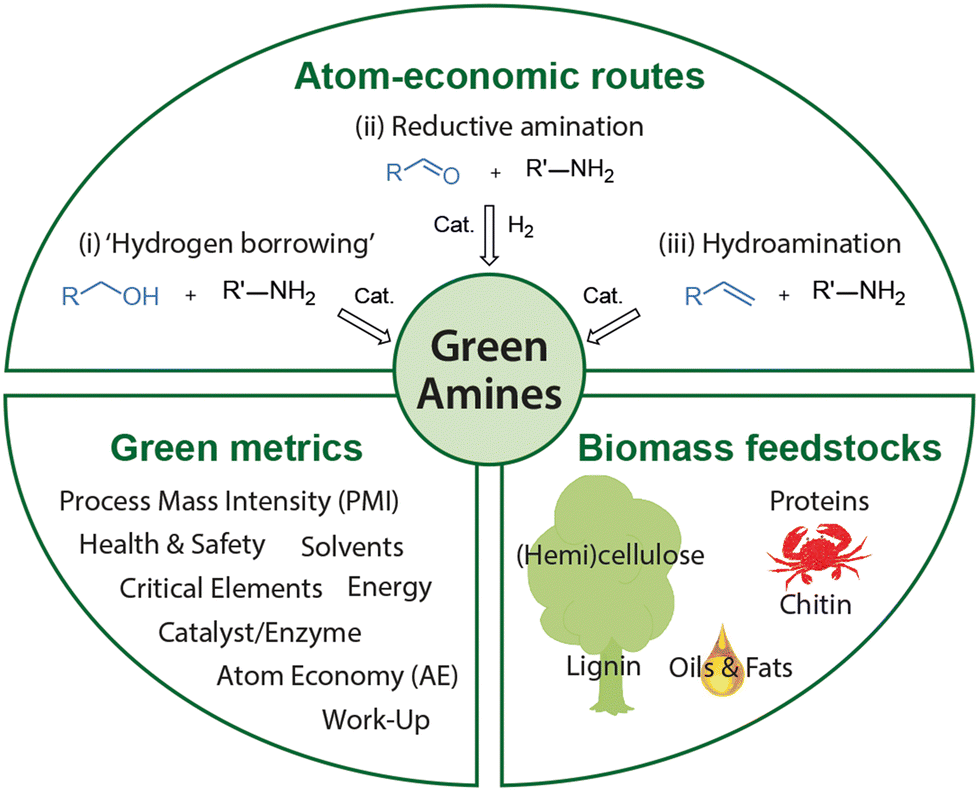
The catalysis program combines catalyst synthesis, characterization and catalytic methodology development both in homogeneous and heterogeneous catalysts, with particular focus on Earth-abundant metals and the development of atom-economic functionalization of renewable building blocks.
One key technique for transforming biomass-derived alcohols is the hydrogen borrowing approach, which excels in C-C and C-N bond formation reactions with only water as a side product. Inspired by this principle, our group has established efficient strategies for the catalytic amination of lignin-derived alcohols towards the synthesis of high-value N-containing chemicals. We also pursue atom-economic C-C bond forming reactions, such as hydroformylation or hydroaminomethylation.
We are interested in a wide variety of sustainable transformations, particularly tandem and multistep processes. Additional topics of interest to the group include acceptorless dehydrogenation methods and other alternative methods for clean hydrogen production.
Key papers:
Integrated Biorefinery Concepts
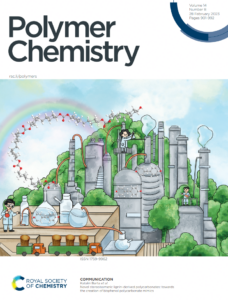
We work towards biorefinery strategies that:
- Fully utilize biomass
- Achieve selective extraction
- Eliminate high pressures
- Avoid noble metals
In particular, we develop lignin-first biorefining methods to ensure the sustainable and atom-efficient use of lignocellulosic biomass. This approach derives value from both lignin and polysaccharides by employing stabilization chemistry, either through catalysis or the use of protecting groups.
We have pioneered diol-assisted acidolysis methods that could potentially be integrated with existing biorefinery processes. A key interest here is identifying and stabilizing the highly reactive intermediate compounds formed during lignin acidolysis. Additionally, a major focus area is reductive catalytic fractionation, using a variety of readily available (Earth-abundant) metal catalysts.
Key papers:
Green and Alternative Solvent Systems
Recognizing the crucial role solvents play in biorefining and green chemistry, our research includes the development of catalytic methods using green solvents, focusing on alternative reaction media:
Supercritical Fluids
We investigate supercritical methanol as both a solvent and a hydrogen source for transformations like depolymerization or C1 synthesis (e.g., benzimidazole derivatives). These reactions are facilitated by Cu- and other transition metal-doped porous metal oxides.
Tailor-Made Ionic Liquids (ILs) and Deep Eutectic Solvents (DESs)
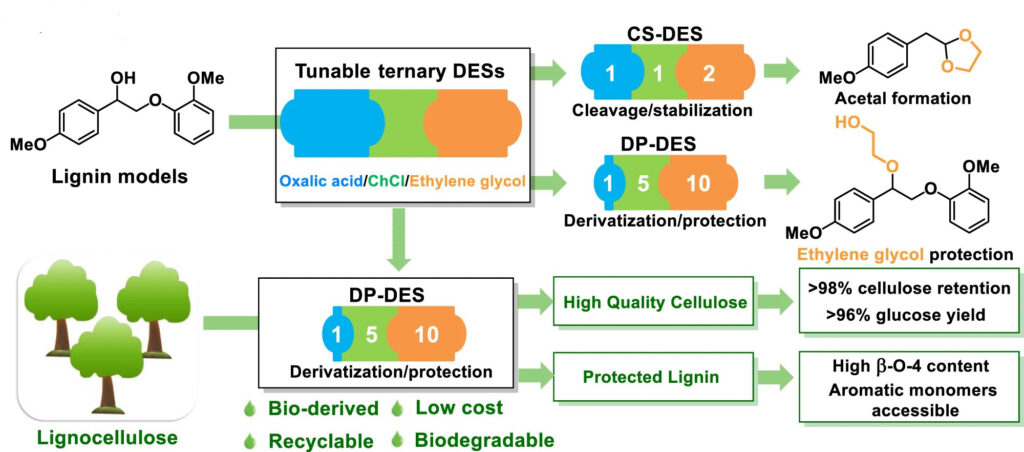
We actively design novel, multifunctional solvents, focusing on non-conventional media like DESs and ILs. The key advantage is the ability to tailor their structural design to incorporate specific functions. For instance, we develop tunable ternary DES systems to enable crucial ‘stabilization’ in lignin-first biorefining, where this highly ionic media efficiently solubilizes lignocellulose to yield desired fragments.
Key papers: